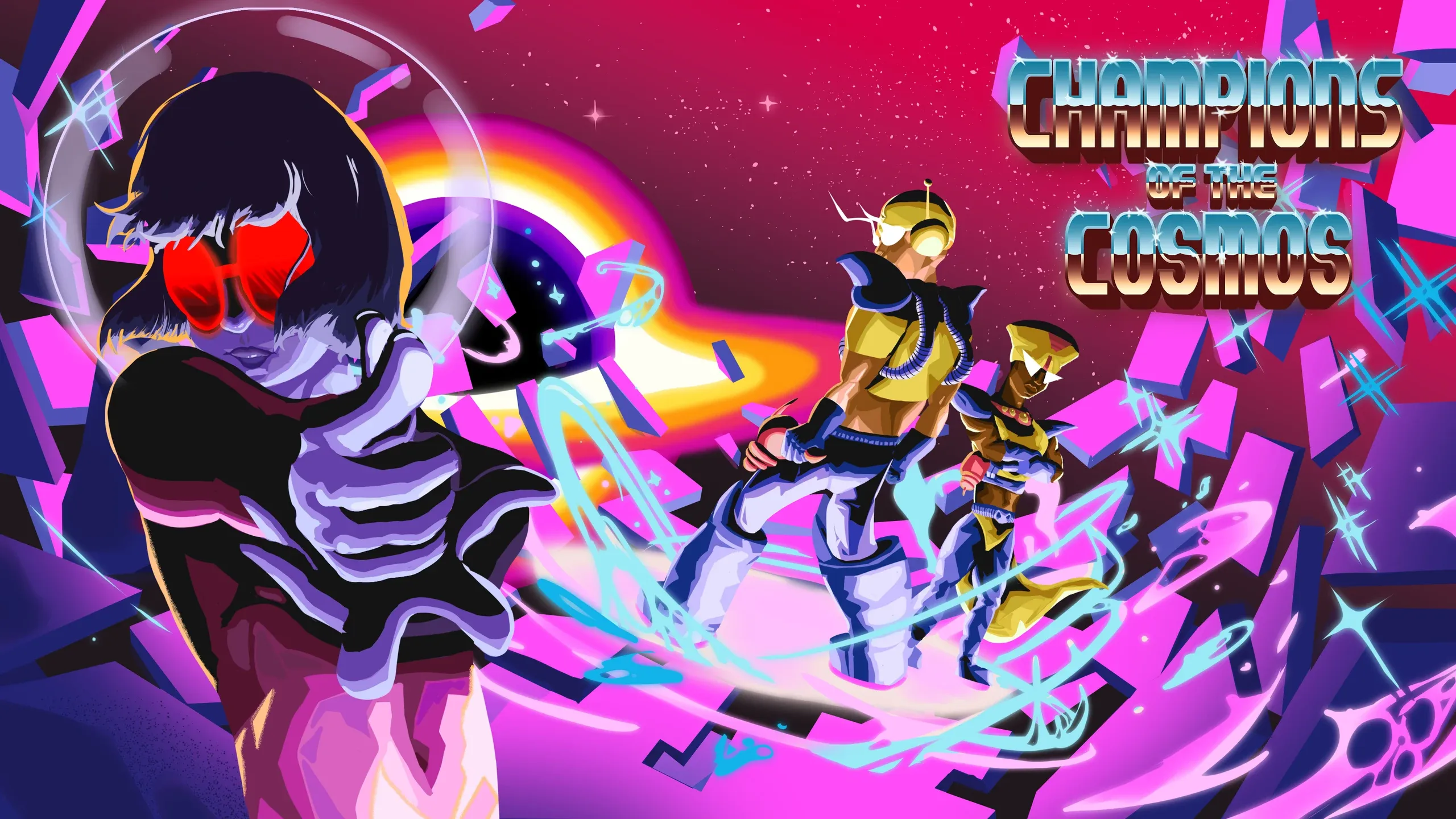
Champions of the Cosmos
A retro sci-fi RTS where heroes reshape the landscape itself.
Trailer
Design breakdown
- Core mechanic
- Playable heroes with the power to reshape the landscape around them, the twist the whole strategy layer is built on.
- Wearing many hats
- Game design, programming, and sound design on one small team. This was also the first game I coded entirely on my own.
- What I learned
- Hands-on experience across several disciplines, and what it takes to carry a game from concept to completion.
Champions of the Cosmos is a retro sci-fi RTS inspired by the action figures, comics, and movies of the ’80s. Heroes wield the power to reshape the landscape around them, along with other unique abilities, on the way to taking over the cosmos. Which side you fight for is up to you: light or darkness.
We built the game in a single semester as part of my game development degree, and released a demo on Steam. The brief asked for a strategy game with a unique twist at its core, and the landscape-reshaping heroes became ours. Because the team was small, I took on multiple roles across game design, programming, and sound design.
This project also marked the first time I coded an entire game on my own. I chose Unity 6 for its streamlined workflow and accessibility, over heavier engines like Unreal. By the end of the semester my technical and design skills had grown considerably, and I had seen a game through from concept to completion.
Implementing every system and feature myself made this project a turning point for me. It taught me to think technically and to design systems and mechanics with their implementation already in mind. Sketching out how each system works on a deeper level, and how the systems influence one another, made the coding far easier: the seams were marked and the systems isolated before the first line was written.
The biggest technical challenge was live terraforming. I used Unity’s terrain tools at runtime so players can reshape the ground while playing, which made the gameplay truly unique and dynamic.